Monday, 5 March 2007

Agatha Christie needs charity?

I hugely admire the National Trust. Most of the time. The audacity of taking on properties and places in perpetuity for the benefit of us all. Who else would do it? Who could even face the budgeting for supplying dusters to a stately home for ten years let alone for ministering to its every need forever? It puts the concept of long term planning into perspective. This whole 'til the end of time thing does mean you have to make your decisions on what to take on and what to put aside very carefully indeed. As an ex National Trust regional committee member (an interesting but strange experience that made me feel very odd-one-out) I have appreciated what making these decisions mean and how rigorously endowments need to be considered before taking on new holdings of land or property.
Last month I received a letter from the Trust asking for a contribution towards the major restoration of Greenway, the only surviving home of Agatha Christie. Given to the Trust by Christie's family in 2000 its gardens have been open to the public for the last 6 years and now Christie's daughter and son-in-law have died, the house also belongs to the Trust. The repairs are estimated at £3.5million, with cataloguing and conserving adding a further £600,000.
If you were to ask me for a bit of dosh to save a piece of coast, or for an ancient forest I would cough up and be glad that the Trust can be counted on to do a job that no-one else will. But Agatha Christie's house? When Miss Marple and Hercule Poirot are household icons and murder mysteries are everyone's favourite bank holiday fare? Perhaps a commercial company such as Tussauds, owners of Warwick Castle, Alton Towers and the London Eye to name a few attractions, would be better placed to take on a project like this. But as it sits with the Trust, I would suggest that the commercial exploitation potential for the property must be huge; shouldn't the Trust be generating funding for this from the private sector and creating a surplus to contribute to other less immediately attractive projects? Humphh.

Friday, 2 March 2007

Farm subsidy - and all that jazz

From time to time Farmers Weekly has skulked on the kitchen table, with headlines like "the cloud behind the silver lining" telling you all you need to know about this pessimistic publication. To suggest it is a chronicle of whingeing, carping and hand-wringing would do most editions justice. I may, however, have gained an insight that might temper my view a little. These days, farm subsidy (now the Single Farm Payment or SFP) is no longer for production. The days of supporting, indeed encouraging, butter mountains and milk lakes are long gone, and to qualify for subsidy you need to be farming in an environmentally friendly way that conserves the countryside for all. Not popular with all farmers, it will contribute in a small way to improving the environment for flora, fauna and traditional landscape features on our farm. At least it would, if the process of communicating with the body that handles the SFP left me enough energy to get on with the farming. The Rural Payments Agency (RPA) has got to be one of the most infuriatingly bloodpressure raising organisations I have ever had the misfortune to deal with. When they get your reference number, address and all other details apart from your name wrong, you write and expect it to be sorted. When, nearly two years and countless email, telephone and snail-mail communications later you are still trying to get all of this most basic of information corrected, patience wears desperately thin. When you get letters (to your ex-address) containing profuse apologies and helpful souls on the phone saying it's all been sorted, you dance about the place like a loon thanking your lucky stars (in that cloudless sky) that you might have finally secured a few hours back in your week. When you find yourself swearing at the poor messenger on the end of the phone because you just can't believe the incompetence of the system has ballsed up yet again, you know that something has got to give - now it's your sanity versus theirs .
As contributors to Farmers Weekly are highly likely to be dealing with the RPA regularly, it's not surprising that the tone of the magazine can leave you checking every gift horses mouth and poking at the silver linings for grey, claggy misfortune.

Tuesday, 27 February 2007

Oops.....

There is a forbidden word. It became forbidden when the 6 tonne digger arrived. When the person most likely to use it was a novice. When there was lots of opportunity for mistaken demolition. And where the excitement of a full size Tonka toy could overcome spatial awareness. It was agreed that "oops" was entirely disallowed, binned, banned and canned. As in "Oops, I've just knocked down the side of the barn", or "Oops, do you remember where that wall used to be?", and "Oops, I was just using the digger when.....". So wary are we of the previously beloved "oops" that it has vanished from normal conversation as if the saying of it might result in rubble, ruin and wrecking.

Thursday, 22 February 2007

Tomato and Chilli Relish and the wonder of Google archives

Last week we opened the first jar of tomato and chilli relish that I'd made last September from the polytunnel-grown glut of beefsteak tomatoes, and that first small pot has all been snaffled (mostly by me) before the week was out. It was utterly fantastic - sweet, warming, no vinegary sourness at all. I hunted around the cookery books for the recipe to mark it up for repeating this year, and then remembered that it has been an on-line find. Googling to find it again didnt work at first - none of the recipes that popped up sounded familiar - and then I started to look at my Google desktop history for "tomato relish" and there it was, posted by Libby on the Delia on-line messageboard, secured from a distant New Zealander. So here is the posting, and here is the recipe:

6 lbs ripe tomatoes, skinned and chopped
4 oz salt
4 apples, peeled and chopped
8 large onions, chopped
3 lbs sugar
4 small tablespoons mustard powder
1 pint cider vinegar
5 small fresh chillies
2 tablespoons cornflour and a little vinegar to mix it

Mix the mustard powder with a little of the cold vinegar. Add to other ingredients in a large pot and boil for at least an hour. Thicken with 2 tablespoons of cornflour in a little vinegar and bottle in sterilized jars.

Chopped liver

4 chicken livers
2 hard-boiled eggs
1 medium onion
chicken schmaltz (or duck/goose fat)

When I was a child, more than thirty years ago, my mother usually did a chicken for Sunday lunch. If it was a boiling fowl we had the neck skin stuffed with dumpling ingredients, stitched at both ends into a large sausage shape and boiled alongside the fowl to eat greedily in slices with the chicken soup first course.

More usually my mother roasted the chicken and would save every scrap of chicken fat (schmaltz) from the roasting pan to make chopped liver for supper. The butcher was always happy to throw in a few extra chicken livers; most of his customers didn’t seem to want the giblets.

Once lunch things were put away I had the job of chopping the onion and boiling the eggs. My mother fried the onion in plenty of schmaltz until it softened and then added the livers. When the livers were cooked they were left to cool a little in the pan. She then tipped the pan on to a board and chopped the mix with the hard-boiled eggs until she had a coarse pate–like texture. Every little bit was scraped carefully into a bowl, including any fat still lingering in the pan.

Eaten slightly warm with toast turned Sunday evenings into something more than the lull before Monday morning school. I still make chopped liver occasionally and each time I wonder why I don’t make it every week; it tastes of childhood and is simply delicious.

Tuesday, 16 January 2007

Squirrel for tea

The workshop looked like something out of a game cookbook photoshoot; 2 brace of pheasant, 4 partridge, a solitary wild duck and a couple of pigeons swung by their feet, tied to the beam with baler twine awaiting an orgy of plucking. The feathers flew, the innards, heads and feet went in the rubbish and the freezer contents swelled. Something of this sort happens nearly every other weekend in the autumn and winter as the local farmer's Saturday shoot surplus finds its way to our door. Fantastically tasty and free meat - what more could you ask? Our stalwart providers said they took their hats off to us - that we were seemingly prepared to eat anything. Some distant memory of Hugh Fearnley-Wotsit eating squirrel resurrected itself - we've not tried squirrel yet we said. Two weeks later a very smiley face appeared carrying a very fat example of the breed; I suspect it had been their particular challenge that week to find us something new to tackle. A chubby grey squirrel that looked more like a stuffed toy than a food source sat on the chopping board and soon looked like a small skinned rabbit. We casseroled it in the luscious apple and calvados gravy left over from the previous night's pheasant. It smelled nice. It tasted fine. But it had the texture of an unreconstructed rubber tyre/wellie boot. The fact that the shotgun pellets had all collected under the skin and not penetrated into the muscle should have been more than a hint; the wee beastie was not so much fat as mature, I suspect.

Monday, 1 January 2007

Ethics, morals and confusion

I rarely read any newspaper article with a man in a dog-collar featured at its head, but something about John Sentamu's piece, "Ethics must shape our global economy" made me press on. The Archbishop of York describes how feeble is the typical guess as to the meaning of ethics: a feeling of what is right or wrong; linking ethics to one's religious beliefs; thinking that being consistent with the law of the land will make your actions ethical. We can all think of examples when taking those as our ethical standards would have meant condoning or carrying out terrifyingly unjust actions.

The Archbishop describes ethics as referring to "well-based standards of right and wrong that prescribe what humans ought to do, usually in terms of rights, obligations, benefits to society, justice, or specific virtues - such as decency... ethical standards also include ... honesty, compassion, and loyalty... rights to life, freedom from injury, and privacy. Secondly, ethics refers to the study and development of one's standards... it is necessary to constantly examine one's standards to ensure they are reasonable and well-founded. Ethics...means...studying our moral beliefs and conduct, and striving to ensure we, and the institutions we help to shape, live up to reasonable, solidly based standards. We must always allow our standards to be open to question and judgement."

And that's when I moved from agreement to confusion. For me, the term morality or moral beliefs means something that someone somewhere is going to get het up about in order to restrict my or someone elses personal freedom and probably our personal rights. Rather than feel comfortable with the idea of morals, I get very nervous that some dubious moral code is being used to justify entirely unethical actions, or at the very least make it difficult for individuals to assert their rights.

I suspect many of my concerns are linked to what others would call sexual "moralities". That a religion can dictate that couples refrain from using contraception because it deems it intrinsically evil; that condoms are the work of the devil and are useless anyway; that couples should either refrain from sex altogether or keep pushing out a child every year and compromise the woman's health, their sanity and their family, seems to me utterly unethical. That anyone other than the woman involved can ultimately decide whether or not she can or cannot have an abortion is likewise unacceptable in my ethical terms. Just as untenable to me are: denying young people sex education and easy access to contraception; that those with a "moral code" are refusing women the morning after pill; that gay couples should be treated differently in law from heterosexual married couples etc etc etc.....

The prurience of the tabloids when dealing with sexual affairs also sickens; they trawl unendingly for what they see as "dirt", splash it happily all over the front pages to sell their papers (and we buy them!) and condemn those targetted as if we were in the middle ages and stoning and the stocks had just been banned so public ridicule must be ensured in other ways. It's just sex, folks; stop getting so worked up about it.

But away from personal life, what about those business ethics issues? Green or ecological policies seems to be a confusion with ethical policies; if we are ecologically sound, surely we cannot be unethical at the same time? I don't know the answer; I only pose the question, but I guess that it's a matter of perception, knowledge and understanding the longest of long term effects of the actions we take today and tomorrow.

Wednesday, 1 November 2006

Playing with apples

For the first time ever, in October 2006 there were enough apples to make it a genuine crime not to use them properly. Hiring an apple crusher and press from the local commercial makers was simple, and the apple picking was a joy - filling barrels in the tractor link box making sure that each different variety was kept separate and labelled on a cold but sunny autumn day was a novelty. They got a quick bobbing in clean water and then were put through the electric crusher before putting the pulp into the press. The smell of the crushed apples was heavenly. The pulp is put into a kind of stocking (very high denier!) bag, wooden blocks hold down the lid and then you turn the press until the juice flows. It comes surprisingly quickly and clean food-safe buckets have to be at the ready. We made over 100 litres of apple juice and 4 barrels of cider. The cider was a mix of bittersweet and sweet cider apples with some Bramleys for extra flavour. The juice was a combination of blends and single juices and now, some months on you can determine which ones should be incorporated into blends when juicing next years load and which are best kept as single varieties. The orchard has a lot of Blenheim Orange apples - very sweet, in fact too sweet as a single variety juice - but just fantastic when blended with Egremont Russet and Bramley (ratio of 1:2:1). The best single varieties were Allington Pippin and Ellisons Orange. I didnt want to pasteurise so had to freeze the juice - in new 1 litre plastic milk bottles that a goat-keeper in Milton Abbot had surplus to requirements. The cider has been racked once and now needs to be bottled, ready for tasting in the summer. Cider making and apple juicing has been happening in and around Dartmoor for hundreds of years - it's nice to know that you are part of a tradition and that there is a lot of advice around for novices.

Wednesday, 20 September 2006

Beenleigh Blue

I'm still mid-lunch but this is just so yummy I have to share! I have blogged on cheeses before but I'm increasingly knocked over by the quality of Devon cheeses. The fab cheese shop in Hatherleigh Market, only open on market day (Tuesdays) has a small but perfectly formed collection in a space that can accommodate 3 shoppers, tops, and two if they have bags of market veg with them. Having a particular love of ewe's milk cheese I went for a slice of the Roquefort-looking Beenleigh Blue, made by Ticklemore Cheese in Totnes. It is crumbly, perfectly salty, and mouth-fillingly delicious as the tiny taster I was offered, proved. The taste lingers and although it is distinctively eweish in nature, not so pungent as to put off the more conservative cheese eater. You can buy it on-line from the Teddington Cheese Company or from their own Ticklemore Cheese Shop in Totnes. Even Nigel Slater and Gordon Ramsay sing its praises. This is a real find; perhaps cheesemaking can be my last career change.

Monday, 18 September 2006

Pork brings pleasure

"We have started on the pork- it's better than any I've had before! ". When you get comments like that you know you are doing something right. Those 6 Berkshire pigs are being feted in kitchens from Cardiff to Bristol and Devon to Warwickshire. The grass in the pig paddock is making a swift return, following the fabulous ploughing that six unringed noses made throughout the summer. They unearthed mounds of sizeable stone which I am slowly picking up and chucking in the link box, carting it off to use as much needed hard core in gateways. The absence of the pigs is quite tangible - they made plenty of affable noises, pungent smells and being so many of them, spent most of their time playing in a sizeable space, learning how to hoist themselves into the water trough and create wallows to cool themselves off on hot days. Sentimentality bows out though, when the freezer needs filling and it is months since you were offered a decent bit of pork.

Wednesday, 13 September 2006

The Olympic bandwagon

Absolutely NOT a sports fan (if you hadn't already guessed), my prime unpatriotic groans about the 2012 olympics are that they are: a) going to create havoc in London and jealousy in every other city in the UK; b) that huge amounts of public money is being chucked at a pipe dream; c) that sport will play an increased role on a world stage already saturated with the tedious stuff; d) that hosts of private finance initiatives and their top brass will retire to the Bahamas on the proceeds, having hugely over-charged a government apparently unable to get value for money from the private sector; and e) that funds will be diverted from real good causes and the arts. In the last year, the London Olympics has become a sexy hook for the widest possible variety of projects, schemes and organisations in the private, public and not for profit sectors. If they can just make a link, no matter how tentative, they might just cream off some of that lovely sloshing-about lolly. You can just hear the Chair or CEO coming in on a Monday morning, rubbing their hands together and shouting "olympics!", just like they shouted "Y2K" back in 1999; it makes them seem up to the minute, hot to trot, thinking outside the envelope or any other daft cliche you care to think of. Today however, I open my regular Involve newletter from the Sector Skills Development Agency to read that "The 2012 Olympic and Paralympic Games in London represent a real and significant opportunity to drive up skills not only in London, but nationally". Apparently, "The Department for Education and Skills is responsible for maximising the benefits of this once-in-a-lifetime opportunity in the field of education and skills, so that 2012 has a long-term impact on the lives of learners, particularly young people of the 2012 Olympic generation." Is it uncharitable of me to say that this is a load of old guff, and if it takes the Olympics to get government to do its core work, then we truly have our priorities completely twisted? The Olympics is not a once in a lifetime opportunity - what is once in a lifetime is every individual's opportunity to develop and thrive. It makes me incandescent that this is linked to something so peripheral (yet so high profile) as sport in the noughties. Olympic and paralympic sport is elitist by definition - the best competing with the best. It is not about access, or that old saw about taking part, but about winning. To dangle this vision in front of Jo and Joe public and suggesting it will specifically enhance their skills in any way is bonkers. Jo and Joe need great schooling and education, great skills development opportunities and a real, interesting life, not lived vicariously through feted sports celebs viewed on the box.
(Sept 2006)

Saturday, 2 September 2006

Little grey rabbit time

It's harvest time and as it's been throwing it down and the outdoor tasks put on hold, the preserving pan has been gurgling away all day. The two small plum trees were stripped of their bounty and the fruit turned into goodies for immediate and long term pleasures. Plum tart will go into the oven for a late supper, but for the months ahead 2 different sorts of plum jam - same recipe, different plums (fruit, sugar, nothing else) - are now on the shelves. A tray of halved and stoned plums have been frozen and bagged up to make a couple of winter crumbles. Kate's chutney gets made every 2 or 3 years as it gets better with age so I make enough to last that long, and this year is the first time it's been made in Devon. The recipe comes from a great grandmother from Norfolk (I think) and has been adapted this year as there weren't enough dates, so dried apricots and figs made up the lack. The apples and plums for the chutney came from the orchard, the tomatoes from the polytunnel, and the carrots were blagged from next door from the sack used to feed their breeding water voles. Tomorrow it's time for tomato relish and if the rain holds off, there are heaps of sloes and blackberries to pick for cheese and conserve. The shelves are starting to fill again, my hands are discoloured from stoning the fruit and socks are being worn for the first time in months. It must be heading for autumn.

Friday, 1 September 2006

Ornithology made easy

A casual conversation about bird feeders, £5.95 on a peanut feeder and £4 on one for suet balls spent in the local agricultural store, a length of ash cut from the firewood heap, feeders dangling in the breeze, and there was years worth of education and entertainment all set up less than a yard from the kitchen window. That was in March. Since then there have been: nuthatches (look, look, there's one that prefers to eat upside down...); a wren or two - a personal favourite; blue tits and great tits; house and tree sparrows; chaffinch, goldfinch, bullfinch; and a pair of great spotted woodpeckers. The woodpeckers were spectacular: large, dominant and shy with brilliant red patches under their tails and on the back of the (male) head, they successfully reared two young that later learned to feed themselves as juveniles after sitting on the iron railings getting their parents to loosen peanut after peanut from the feeder and pass them on like a parent doling out smarties to toddlers. Apparently woodpeckers also feed their young on baby blue tits and there are no shortage of those.
Fledglings of all kinds have hovered about looking fresh and fluffy and unsure, and the type and age of birds visiting have changed as the months have passed. The time of day also dictates who eats when. Early morning, before anyone is up, magpies take advantage. I really don't like these birds as they eat the duck eggs and have a raucous and insistent call. They have gone further down in my estimation by not only nicking the peanuts put out for the smaller birds, but tapping loudly on the windows hours before any sane person would consider setting their alarm clock. The vigour of their tapping initially made me rush out of bed wondering what someone could possibly want at that hour - sheep out on the road perhaps - but no, it's just the magpies having their fun. Their brothers, the rooks, are equally irritating as they build nests in the chimney pots causing great clumps of twigs and mummified birds to fall into the chimneys and woodburners, so I light small fires during the summer to dissuade them.
Some of the birds haven't eaten directly from the feeders but pecked instead at the suet and nut crumbs that dusted the grass below like hundreds and thousands. These crumbs also attracted mice, and inevitably, the cats, although surprisingly few birds have been caught. Until yesterday that is. At breakfast there was a whoosh of feathers as a cloud of sparrows dived under the broom bush for cover. A few seconds later a sparrowhawk emerged, sparrow secured in its yellow claws with black talons. He stood for a few moments, just 4 feet away, whilst I had a really good look, and then took off, leaving the remaining sparrows distinctly and understandably nervous for the rest of the day.
The yard has also seen a lot of other birds not attracted to the feeders. Wagtails bounce their way along the ground, or at least the constantly wagging tails make it look like that. House martins have built several of their muddy nests under the eaves around the house, stealing bits of cob from the crumbling barns and swooping in flocks of twenty or so in circles across the yard in the late afternoon. Some are more successful nest builders than others, having watched one make a feeble attempt whilst others were finishing their elaborate structures just inches away. Swallows and swifts are also frequent visitors, sitting on power cables and joining the house martins in their circular exercises. In the evenings you can hear and sometimes see the barn owl, a truly gorgeous creature, and the tawny owl too with its hooting call which if you mimic will get you a response. Then there are the robins which appear from late summer; the cuckoo, although you hear it close by I've never seen it; many buzzards who are incredibly bold round here and can land fairly close to you; the pheasants that shared the pig paddock, eating any rare leftovers; the grey partridge that hatched and reared its young in the middle of Mopsa's Meadow; the snipe that paddle about in the wet drainage ditches with their young. The list goes on, and on.

Tuesday, 25 July 2006

Bedtime

OK. This is going to be a paeon to retail possibilities; I apologise, but only a little. Having a comfortable bed is one of those things that's pretty baseline on Maslow's hierarchy of needs. Pocket sprung has always seemed to me to be a euphemism for lumpy, poky, uneven and unrestful, so something smooth and supportive does it for me. Horribly allergic to goose feathers (that particular fab and pricey duvet is now luxuriating on the guest bed), I hunt out the squashiest non-allergenic quilts and greedily steal as much of it for my side of the bed as possible. I thought I had it sorted until I spent the night at friends; it's Jane and Richard that have got it sorted. I got into a great big bed kindly vacated by one of their children to discover a kind of duvet-under-the-sheet deliciousness. I was the filling in a duvet sandwich. I spent an age scrunching it in glee with my toes and wriggling my shoulders deeper in a state of disbelieving comfort. What was this thing? Why hadn't anyone told me about it? Why wasn't Annalisa Barbieri writing about it every Saturday? Does everybody else know about it? WHY HADN'T SOMEONE TOLD ME? My world didn't include mattress toppers, enhancers or pads. I'd never heard about, seen or slept on one before. Once you start hunting on the web they are everywhere, costing from a few pounds up to £400 and no doubt even more. Being out in the sticks I can't just pop into my local M&S for instant bedtime gratification, and after some entirely useless email correspondence with that famous store trying to replicate the Jane and Richard experience but getting precisely nowhere, I waited till a looming meeting in Bristol would get me in spitting distance of shops. There, in John Lewis, hiding nonchalantly and without ceremony among the duvets was the holy grail. £55 for nightly bliss is a small price to pay.

Friday, 7 April 2006

A letter to all the people who used to live on the farm

When you move into a new house, if you are lucky and the vendors thoughtful, there might be a list of where you turn off the water, a description of the careful handling required for the loft hatch, and a note of when the bin men collect. Moving into our previous house we received reams of instructions, a list of all the plants and trees, and notes and jottings hidden behind skirting boards, under floors, on corrugated tin roofs and in the hen house giving dates for when things had been attended to, plus a commentary on that day’s entertainment – the success of the Christmas panto at the Belgrade Theatre was one example. But when you move into a farm that hasn’t been lived in by farmers for the best part of a decade, you have a million questions, and only local lore to supply just a fistful of answers. There are so many things that I want to ask you all.
That stone-faced banking at the far end of the farm, just running for a matter of yards, so carefully made and where only the sheep can see it; was it something your parents got you to do as penance for some minor misdeed? That enormous well in Little Stone Horse Field; did it ever feed water to anywhere or was it a white elephant, an unfinished project that ran out of cash? Did you use donkeys or horses in the now derelict roundhouse for the threshing barn? That room at the side of the house that you can only access from an external staircase - was it where transient farm labourers slept, away from the temptation of the daughters of the house? Where do all the drains run and why are there at the last count four separate water supplies? Which of you took out and flogged the slate flagstone floors in the house and put in concrete? Who put in the Aga in such a way that you can't use the bread oven anymore? Why is the old cider room floor creased in the middle; was there an mini-earthquake? Who screwed down the floorboards so that they cracked as they shrank? And why are there one inch gaps between the boards so that coins, earrings, pens and other small items both cheap and expensive are lost?
Do you mind that we gave new names to three of the fields when neighbours couldn’t quite remember all of the old ones; the naming of fields felt like an exercise not to be undertaken lightly. How exactly did you make and manage your hedgerows and banks in the 17th century and how long did they last? And this century, that low fencing wire you put along the top of the banks – what was the point of that – even our small sheep breed can hop over it without a second thought. Did you allow your livestock to drink all along the mill leat or only where it wouldn’t interfere with the flow to the neighbouring mill?
Didn’t you mind the smell of the pigs in sties so close to the house? Where did you salt and store the bacon? Did you make your own sausages and have as much fun as we did? It was much, much easier to do than we had expected, even more hilarious, with fabulously tasty results.
Did you ever get to see the dormice that we know live in Langan Meadow only by the evidence of precisely nibbled cobnuts? It’s even illegal to photograph them now. And why is Langan Meadow that strange rounded shape? Were the buzzards, bats and barn owls even more plentiful? Was there ever any wild boar here? When was that veteran oak by the river blasted by lightening and lose its top? It has a rowan growing out of its crown now. Which of the ditches have disappeared and need to be re-dug to get the ground less “drought-resistant” as the estate agent described the more sodden fields? Where on the farm did you dig up the clay to make the cob walls for the barns that are melting away now the roofs have gone? What types of apple grew in the orchards and was the cider any good? We heard that when one farmer here told a son to fetch a jug of cider, that he be sure to keep whistling the whole time – but did you ever manage a secret slurp? Did you ever think that the farm is shaped along the lines of a mini South America?
Did you ever run out of things to do and did you ever get enough sleep? Did you ever write a to-do list? Did it look like ours? What have we forgotten?
We feel the weight of your absence as we move across the farm, mending this, patching that, planning the next ten years of work. By the time the hundred oaks we want to plant come to maturity, someone else might be writing a similar letter to us, but before then perhaps one of you could tell us the whereabouts of the socket for the radio aerial?

Saturday, 18 March 2006

Organic veg delivery boxes rool

Is it a truism that as you get older the more you feel the need to complain? Me, I expect decent and friendly service and have been known to carp when it doesn't come as standard. I've mentioned Riverford before and whilst waiting for the new veg garden to become a reality, the weekly boxes have been a fab addition, bringing new varieties and mostly seasonal goodies at their best. The Guardian praised them last week with the acknowledgement that the soil on the carrots could be collected to create your very own London based smallholding; in my case, when I'm too lazy to scrape the soil into the compost bucket, it just clogs the sink and the less than organic Mr Muscle sink unblocker (the things that have websites!) has had to work overtime. But then we got the tomatoes. In January, February and March. Horrid, quickly turning rotten, tasteless. What else would they be in winter, and why were they in my box? My query was very swiftly answered; my local Riverford distributors obviously felt the same way although they were tactful. Then Adrian, Riverford's Customer Services Manager got in touch and apologised for the poor quality of the product: "Whilst our own tomatoes will not be ready for some months, we do feel that having tomatoes in the boxes brings a positive addition for this time of the year. We are therefore currently importing tomatoes but we are aware however, that the quality of some of them has not been up to the standard that we would expect. The taste of the product has actually been good but there have been issues with their physical quality including blemished skins and mould appearing very quickly." That made me have an immediate munch on one of the unappetising examples to test out the tastiness: My conclusions, shared with Adrian were that they don't even feel right in the hand - if I was selecting produce from a market stall, I would not be purchasing them - if I was picking them off a homegrown plant I wouldn't buy that seed variety again. The stalk end was showing signs of incipient mould and had been in the fridge ever since delivery (I rarely need or want to put summer tomatoes in the fridge - far tastier at room temperature or warm off the plant). The flesh texture was both hard and weirdly pappy - like a tomato out of season - although the pulp and seeds were quite flavoursome. As nice as the idea of tomatoes is, I just cannot square organic principles with this unseasonable (and importing) approach - although if the produce was fabulous I am as apt to drop a principle as anyone else. As they are so very far from fabulous, what is the point? I love tomatoes, but they need good hot sun for good ripening and taste. I appreciate that they feel the need to jazz up the veg boxes in the winter months, but the tomato thing just isn't working - the odd lettuce they have been putting in have, on the other hand, been fine. Adrian kindly said the feedback was useful and much appreciated, and in this week's box is a stop press note that they have been disappointed with the standard of their tomatoes, that they have tried to persevere with the grower on the promise of improvement of quality, but as this has not happened they have removed them from the boxes. I am sure I have not been the only one having a carp, but isn't is refreshing that the customer's views are truly taken into consideration to improve the quality of the service. Full marks Riverford.

Friday, 17 March 2006

First lambing in Devon (2006)

"It's warmer in Devon - let's lamb a bit earlier this year" has turned out to be somewhat wishful thinking. It snows, it hails, it's as windy as hell, but the lambs have started to arrive all the same. A quarter of the way through and we have had all ewe lambs - how weird is that? Never one for probability theory, I guess that each lamb has a 50/50 chance of being one sex or the other, so I presume that there is no greater probability that the remaining lambs will turn out to be rams. Perhaps the new ram, Toy-boy, has an intriguing chromosomal make-up. The old ram, Thoom (or Tomb? was never given the spelling) was put in with the ewes at the same time as Toy-boy and there is no proof of who did what and to whom. Raddles and all that malarkey seem too much trouble for our small flock. Reading Hardy's Return of the Native can put you off red raddle for life, but it's just a crayon or powder - originally red ochre or iron oxide - that is put on the ram's chest so you can see which ewe has been served and by which ram, using different colours for each ram. Some use a harness to attach a crayon block to the ram, but it all seems rather too S&M to me.
The new mothers are doing their thing admirably, seeing off dogs Mopsa and Fenn in no uncertain terms if they get too close (ie in the same field) and producing huge quantities of milk; I don't know how they manage to walk.

Tuesday, 21 February 2006

Today we have naming of fields

The farm is strangely shaped along the lines of a miniature South America, with the house on the eastern coast of Brazil, a bit of river frontage on the west coast of Ecuador and a mill leat across the top of Venezuela. Accordingly, and not much changed since medieval farmers were doing their thing, the field boundaries are all shapes and trying to describe where you will be is not as simple as saying 3 along and 2 up. The naming of fields feels like an exercise not to be undertaken lightly, and maintaining the historical names if they can be extracted seems appropriate for somewhere that has been around for so long. Even so, I suspect names change every few generations. Last weekend we walked the farm with someone who had grown up here and he knew names for all but three of the fields. So we have Big Stone Horse Field and it's neighbour, Little Stone Horse Field, both stoney and where the horses were kept. Then there is Pretty Field, so called because it has a regular shape. Big Furze Down and Lower Furze Down are the names for the two fields that had been covered in gorse before they were ploughed up for arable purposes; gorse still flowers in patches in the hedgerows and creates a very prickly and effective sheep fence. Long Lands was probably named for the fact that although not large (none of the fields are very big), it is a fair uphill walk to reach the end. Higher Down and Lower Down sound like a joke but they do what they say on the tin, and Big Oaky and Little Oaky have a few fairly spectacular oaks in the hedgelines. Bull's field was where the bull was kept with his cows, and so on it goes. Having only to take responsibility for a limited number, we have named the nameless fields. One is now Mopsa's Meadow and another Fenn's Field. Nice to think that long after the dogs have gone their field names will survive. And yup - that's South America, not the farm!

Sunday, 5 February 2006

In the eyes of the delivery men

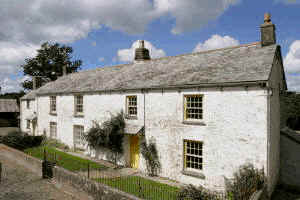
When, last March (2005) I got out of the car and peered over the gate down the farm track, to the long whitewashed house with yellow window frames, I knew this was going to be my next and possibly last home. Peripheral to right and left were the old barns, roofless and in one case, covered in "dangerous, do not enter" signs, but they in no way detracted from the views rising above the house, nor altered the fact that the house sat sheltered in a dip surrounded by masses of space and enormous oak trees. The place felt untouched for decades and the quietness of the location was something I hadn't thought was possible to achieve. So love at first sight then. Living a long way from anywhere you make a lot of use of online-shopping; clothes, beds, tractor parts, and whatever else is needed. As a consequence you see confused delivery men (they are always men) frequently. The confusion is based on three things: there is no street name; they take pot luck in deciding whether to deliver to us or our neighbours because the farm names are very similar (but not the same); and according to delivery man lore, only sad, mad or bad people live so far from an urban sprawl. Last week was a prime example. A couple of chaps were delivering a new wardrobe and stopped outside the gate and phoned us to check if they really were in the right place - their drive down the grassy road and subsequent view of the derelict barns meant that they didn't see how it was possible that the place was actually inhabited by anything other than bats and rats. Even when they came inside the house they didn't believe anyone actually lived here permanently. I hadn't realised that to some eyes we appear to live in the equivalent of a rural slum. Me, I think it's beautiful, and rich with a life-time of possibilities and projects. It's clearly all in the eye of the beholder.

Monday, 23 January 2006

Tearaway Tamworths

Tamworths have got something of a reputation. I believe that they are a fairly primitive breed, with all the natural instincts that brings, and little of the softening of domestication about them. Known as flighty pigs, independent, and the Houdinis of the swine world, a few years ago a pair of Tamworths made national headlines for over a week when they escaped and trundled this way and that through the Wiltshire countryside, eluding capture for a considerable period of time. Yesterday morning I was making my way down the list of weekend chores when I heard my name being bellowed from the neighbouring farm. I downed tools and shot off to find out what was wrong and after a panted explanation of a new arrival Tamworth weaner having escaped up the road, we set off to head it back where it was wanted. Five of us failed in this task, and just as we were about to regroup, the alarm was raised that its sister had now also managed to leap from its new pen and disappear in the opposite direction. Throughout the day the few cars and tractors coming passed announced sightings of one or other of the ginger pigs and by dusk one had been recaptured and securely placed in its pen. Utterly exhausted by its escapade, it sank into fresh straw and fell fast asleep. As of writing, the sister is still out and about, but as our neighbours are currently the only folks round here with pigs I guess that it will be drawn back by piggish noises and smells and the desire for breakfast. Stop press! Great news - after 36 hours apart the Houdini twins are now reunited.

Tuesday, 6 December 2005

A party game for Xmas - make sausages

It has been an ambition of very many years to make our own sausages; convenience food in the best sense of the word. Firstly it seemed to be a guaranteed barrel of laughs, with enough double entendre to last a lifetime. Secondly it meant knowing the content was 100% high quality home-reared meat. Thirdly, I think sausages are delicious, they are quick to cook and in hot demand for barbeques in summer and for dark winter evening suppers. And lastly, no matter how I plead with the local butcher when he butchers our pork for us, he produces perfectly nice sausages but they are never quite coarse enough for our taste and always with rusk added even tho I beg him not to (he is convinced that they would all go horribly wrong without rusk and my line that French sausages are 100% meat has little effect - British tradition must be best!). So, thanks to Natural Casing Company's hog casings (fat sausage size - you can keep your feeble chipolatas) that last for up to a year in the fridge, we got together with our neighbours for a trial run before deciding how many Berkshire weaners to buy next spring (that's to say, how many pounds of sausages could we face making next summer). First you rinse the casings (including running the water through them which is a hoot) and soak for about an hour to get rid of excess salt. We used some chunks of venison from the unlucky doe that had got herself tangled in our fence and had perished before we could untangle her, with some of our neighbour's pork - Berkshire they think or perhaps Saddleback - it was the odds and ends from the freezer, but the tell-tale black bristles were still intact. A little salt, black pepper, fresh sage and thyme were added, the zest of two lemons, a sploosh of Chablis (dregs), and a sprinkling of home-made granary breadcrumbs when the mincer needed a clean through (the sinews can get caught up in the blades) which might account for a maximum of 1% cereal and I guess a great deal less. After mincing the whole lot on the coarsest setting in a 40 year old Kenwood we fell about while rolling the 4-5 foot long casing onto the sausage making nozzle before turning on the machine and feeding in the first dollops of coarsely minced meat. Luckily we had remembered to tie a knot in the end of the casing so when the skin started to gently billow we knew that sausage was on its way. It was much, much easier to do than we had expected, even more hilarious in a teenage playing-with-condoms sort of way, and fabulously tasty. As the meat had all come out of the freezer we ate most of the sausages that evening with celeriac, carrot and swede mash, russian kale in mustard sauce and roast tatties (all from our Riverford box). 10/10. And definitely found a new party game.

Monday, 5 December 2005

To be taken daily - a little bit of happy art

I've just received my 2006 diary: the Redstone diary of Happiness edited by Julian Rothenstein and Mel Gooding. I've been chuckling and smiling my way through it, and admiring everything from the gorgeously perfect red paper pocket at the front, the rough mustard pages for me to scrawl on (carefully), onwards to the wonderful images. You get a topless young Elvis (from a more relaxed pre-six-pack era); gently erotic images from East and West; smiles and grins captured from across the world; absurdities like the visuals from a Chinese rusk packet from the fifties; Ganesh happily picking up sweetmeats with his trunk; some Manolo Blahnik and posh shopping bags for the happiness-is-a-designer-label lovers, and luscious Chagall (La Promenade shown here), McLean, Blake and Frost . It has cured me of Collins' diaries forever. My new diary ensures at least daily mini-happinesses for 2006.

Tuesday, 15 November 2005

The Aga saga and a dinner invite

Did you hear the great Matthew Fort blot his copybook last week on Radio 4? He was developing the theme he had originally created in the Waitrose Food Illustrated after being forced to continue the debate in the Guardian following an outraged response from Aga owners. Bantering with John Humphrys, James Naughtie (clearly a closet Aga devotee) and Amy Willcock, apparently called the Queen of the Aga (listen to it here - 8.50am slot) he obviously thought it useless at cooking without really having any experience of it. Amy did a fairly pathetic job of standing up for the great beast in the kitchen - her crown needs handing over to someone who is a far better exponent and I'd like to make a nomination. Not that long ago the even greater Nigel Slater wrote about his new Aga in the Observer - I think we should get Fort and Slater to slug it out, culinarily speaking, side by side and put Fort's comments to the test, where it counts, at the stove.
I have had the pleasure of using both an Aga and Rayburn off and on during the last twenty years, (interspersed with fan ovens and the like) but have only just been lucky enough to get an Aga of my own, an ancient snoring oil-fired beasty that came with the current house and is our only form of cooking; we utterly depend on it. For me, there is absolutely no other way of producing such perfectly moist roasted meats - tender on the inside, crispy without and genuinely melt in the mouth. I have always thought our home-produced lamb second to none, but I challenge anyone to cook it more effectively in any other cooker. For the simpler things in life, its cheese on toast is fabulous. There is something about cooking stuff on the bottom of the oven that makes a grill redundant and cocks a snook at burnt cooking smells. There is however a downside or two that you have to manage your way around. For those of you who would never use the cooker to heat a kettle, it isn't an issue, but if you like to hear a whistling kettle on your stove, are planning the sunday roast or evening dinner and fancy a cuppa first to set yourself up, use the electric kettle instead to keep the heat in the Aga. And most of the cooking should be done in the oven and not on the plates - this really takes adjusting to if you have always used a conventional electric or gas cooker where the hob seems to rule. Me, I have nil patience and if the Aga had let me down I would have got an electric oven and hob installed quick as wink. Instead, the better and far cheaper option has been to invest in a small book and learn how the Aga is best used: Richard Maggs' The Complete Book of Aga Know-how. Come and have dinner in Devon with us Mr Fort; afterwards you might be tempted to put both the book and the Aga to the test.

Monday, 7 November 2005

Duck Eggs - a Saturday Guardian snippet

Fancy earning enough to take someone out for dinner by sharing your favourite nosh thoughts with friendly fellow Guardian readers? They pay £50 for every We Love to Eat item they publish (increased to £75 these days!).

me, I plumped for duck eggs.....(you'll have to scroll to the bottom) or just read it here:

"If you mention duck eggs, urban people screw up their noses. Rural folk will agree that they are great for baking, the deep yellow of the yolk adding a golden glow to any sponge, but you wouldn't want to just, well, eat them, would you?
We, on the other hand, will spurn a hen's egg if there is a duck's on offer. Nothing fancy required: try duck egg and chips, bacon and eggs, hard-boiled and chopped in mayo, chopped in the bottom of the salad bowl with the dressing to tart up a freshly cut lettuce, boiled with buttered soldiers, or scrambled, with a slice of smoked salmon and bagels for a special-occasion breakfast.
We now have our own ducks so we can be pretty profligate. When friends and family descend, a huge platter of egg mayonnaise will always be the first dish to disappear. But my mother won't touch them. Just mention them on the phone and you can feel the reflex nose action."

Wednesday, 21 September 2005

Mopsa and Fenn move to Devon

Back in June 2005 we moved to Devon, partly to accommodate the addition of Mopsa's half-sister Fenn, but mostly to find more space and a more peaceful environment. We seem to have ticked all those boxes, and the livestock have moved down with us, as did the contents of the greenhouse. The spuds stayed behind and I hope the new owners have found, dug, and enjoyed them. Visitors have been keen to see the new place and we have been thrilled by the quality of local food available to feed them. For the first time in a decade, we haven't been in a position to produce all our own summer veg, so the thriving Riverford has been our source of organic green grocery, delivered to the door every Friday morning just in time to plan weekend menus. However, we think ahead and with no greenhouse here, week one found us buying a massive polytunnel to make sure that 2006 = homegrown. Of course it is still unpacked and lying on the ground looking as reproachful as a heap of plastic and scaffold tubes can manage, but I have faith that it will go up well before it's time to sow seeds.
The Tuesday Hatherleigh market has proved a good place to buy live poultry and waterfowl if you take your time and tune into the auction-speak. After a few months of being duck-egg-less (the trauma of travel?) we are finally producing our own breakfasts again, and I suspect that the addition of 5 new ducks - Khaki Campbells and Magpies - finally created enough impetus for the ducks to assess that they could either get on and lay or face the pot. Local cheese is also interesting - Devon Oke, Curworthy, Cornish Yarg (local-ish), although the Sainsburys Brie that was discovered to be riddled with maggots (immediately after eating a large chunk) still makes me squirm.

Tuesday, 1 February 2005

Cheese, cheese, cheese

Cheese. Cheese. Cheese. Soft, hard, mild, mature, blue veined, chalk white, buttery, pungent, nutty, in your face, gentle, toasted, chunks, melted, fondued, goats, ewes, cows................ I love the lot. Does a day go by without some kind of cheese finding its way onto the plate? Only on the days when it by-passes directly into the mouth. Today was a cheese delivery day. After Mopsa barked so loud and deep that the courier left the box in the porch without ringing the bell and scarpered off down the path before he could be forced to come face to face with the terrifying beast, the aroma from the parcel left no doubt as to what was inside. A couple of Christmas's ago Peter (he of the posh blog) and Gavin sent some cheeses from Pant Mawr Farm. After specific guidance on storing it (cut each 1kg round into pieces, bag 'em, label 'em, stick 'em in the freezer) and loving the results, I bought more for a summer party, and the whole lot disappeared, and then more and more so that now there is a constant supply in the freezer, and friends keep asking for the mail order details.
So, what's available and what does it taste like? According to the website there are seven cheeses in the Pant Mawr range and all are made with vegetarian rennet and pasteurised milk. Our presents were Caws Preseli, a soft cow's milk cheese that has more (gentle) flavour than is fair for any mouthful, and Caws Cerwyn, a softish hard (you'll see what I mean if you treat yourself) beautifully pale yellow cheese that is equally mild and flavoursome. Everyone seemed to enjoy these best with crusty bread or oatcakes and some great grapes - a real end of dinner pair of cheeses. The Mature Cerwyn - Caws Cerwyn matured for about six months - has a crumblier, harder texture, shouts out for a chunk of fresh pineapple alongside (forget Abigail's Party, just enjoy the cliched combination), or for using in cooking or grated into leafy salads or celeriac remoulade. It has a deeper flavour, and stirred the senses of friends that love a cheese with serious bite. And then there is the smoked Cerwyn; and the jury is still out on that one. When the parcel was delivered, I thought that I had walked into a smoky bar rather than my own porch. When I opened the box and then unwrapped the cheese, the strength of the smoking was so eye-wateringly pungent for both nose and eyes, that I thought the whole smokery had been parcelled up and sent too. Described as having "a delicate smoky tang", trades description would probably disagree! I know that both hot and cold smoking of foodstuffs is de rigeur for the taste as well as a great way of preserving, but a little more subtlety would have been welcome. As a result, half of the round is still in the freezer awaiting its moment. The last one I have tried is the Soft Goats Curd, with a light covering of olive oil, but it took half an hour to get into the plastic pot; we never worked out the right way of opening it. If your temper holds out it is very tasty indeed, a world away from so much of the supermarket goats' cheeses and perfect for spreading thickly on thin pancakes (we are talking pre-low-carb-diet days), adding a handful of cherry tomatoes and herbs, rolling up, drizzling with olive oil and baking in the oven.
Caws Preseli, Cerwyn and Mature Cerwyn are likely to be pretty constant presences in the house, and the only other cheeses I have bought regularly in recent months to supplement them are Dolcelatte and Parmesan (Parmigiano Reggiano), and I reckon that's an awesome recommendation. Mind you, there was the Malvern ewe's milk hard cheese found in the fab Ombersley Evertons Deli, the supply of mini babybels for the car, the brie, the rubbery Jarlsberg (the more rubbery the better), the local farmer's market cheddar.......................... (Quick November 2005 update - a gift of a Torrington cheese from Cothi Valley Goats, bought at Cardiff's Riverside Real Food Market was to die for; quite the most lusciously lingering and complex flavour). Contact them at Cothi Valley Goats, Cilwr Farm, Talley, Llandeilo, Carms SA19 7BQ
Tel: 01558 685555. E-mail: goat@homested.fsbusiness.co.uk for farmhouse goat cheeses, kid meat, baked goat cheese products.

Saturday, 20 November 2004

Following the Atkins path

I haven't eaten any bread since the middle of June 2004. Five months without bread, pasta, potatoes, rice and pastry. To steal the over-used Victor Meldrew phrase, I can't believe it. To anyone who loves their food as much as I do, that seems an impossibility and one I just didn't try and conjure with before deciding that my weight was out of control and it was time I took myself in hand(fuls). I realise that I have only written one blog since I started, on any subject, and it is probably because any spare time for thought has been spent thinking about producing grub that will satisfy but not expand the waistline any further.
It was the BBC's Diet Trials that started me thinking. I watched aghast as people tried to live with Slimfast, wondering how on earth it was possible to manage a life on non-foodstuffs. I shrugged at Weightwatchers - been there, not done that, and Rosemary Conley was too uninspiring for words. And then there was the much maligned Atkins Diet that intrigued me. We produce a lot of meat and grow a big plot of vegetables. So I got the book and read it. And then I adapted it for me. The main focus is on non-processed foods which in my book of trying so hard to be organic, fitted the bill. Then I was encouraged to eat a good quantity of protein - although the pound of cheese a day (topped by streaky bacon and a ladle of lard if you read the dafter press coverage) is never advocated - how did that myth come into being? For a couple of weeks only I restricted my fruit intake, and permanently (til now anyway) laid off the major carbohydrates. Breakfast was the hardest thing to adapt. I don't want an egg every day - although a mushroom omelette or scrambled eggs with smoked salmon is great a couple of times a week, I can't stomach that daily. So I decided to forget it was breakfast time and ate whatever was healthy and fresh. I might have a bowl of raspberries and blueberries. A mango or half a fresh pineapple. A (big) salad of cos lettuce, real mayo and shavings of parmesan - a kind of Caesar Salad without the croutons.
We bake all our own bread and the hardest thing is smelling the bread as it comes out of the oven. But now I don't eat it, the six loaves last at least twice as long, so the temptation is only there once a month and I have managed to live through that. Pasta, that previous lunchtime staple, has gone the way of bread. I find it easier to stop something completely than create havoc by trying just a little bit. And five months on I am two stone lighter and have about 8 pounds more to lose before attaining my self-imposed first phase goal. When I get there I'll decide if I can take it any further. If my BMI (or you may prefer this one) is anything to go by, for my 5'6" I should be anything from 8st 3 to 11st, a whole 2 st 11lbs variation of possibilities. I would love to be able to create a 'what if?' graphic image of me at either end of that range!
I have read a range of books that have an alliance, however tenuous, to Atkins to see what other tips I might pick up. South Beach was interesting, but I had already found my own way by then, and that's the only trick - finding what works for yourself. Montignac was unreadable and confused, whilst Ruth Watson's Fat Girl Slim was full of useful advice that I continue to refer to, but many recipes added sugar and garlic, both things I try to avoid. Gillian McKeith's programme You are what you eat was unmissable but I haven't taken myself off for any colonic irrigation as yet, although I know friends who love it! (I was mesmerised by this article when it came out in the Guardian in 2002 - one of those pieces you cannot forget and definitely in the category of more information than you really need to know).

I am writing the list below as a reminder that this is the time when it is horribly easy to fall off the wagon. Having gone down at least two dress sizes and feeling closer to "normal", I am in danger of becoming too relaxed. Perhaps if I write this out I will be saved from the ignominy of reverting to my bad ways and pinching not inches but yards. And just as importantly, I want to record my top tips for myself so I don't forget them and can re-use them because if one thing in life is certain, I will have to!
  1. get carbs from vegetables - unlike Atkins, I don't restrict how many tomatoes or carrots I can eat - just cook them healthily and pile up the plate. I also eat parsnips - an Atkins no-no. The only vegetables I avoid are spuds and sweetcorn. Grow swiss chard - you can use it as a pasta substitute - just pile the sauce etc on top of the steamed stalks.
  2. When desperate for a plate of mashed spud, find a celeriac or two, and treat it as a King Edwards - it's delicious and my only problem is that being November I have now eaten all the ones I grew! Swede comes in an ok second best.
  3. Keep the fridge, the freezer and the larder chock full of good things to eat.
  4. Try to keep some parmesan or Gorgonzola to crumble/grate into a salad or to just have a chunk on its own - the powerful flavour is incredibly satifying.
  5. Berries and cherries are great for when a sugar buzz is required, although they need to be eaten within a couple of days or the fur grows.
  6. Roast a chicken frequently - you can always tear off a piece and munch if a slab of toast covered in butter tempts.
  7. Have a great piece of steak, add mushrooms and a salad and pretend chips don't exist. Get the butcher to cut two thin slices of sirloin, so it takes longer to eat than a thicker slab, and some hefty horseradish is a must to accompany it.
  8. Buy whatever I fancy that is on my ok list - loads of tiger prawns, smoked salmon, scallops, fresh fish etc etc. It feels like a constant treat, it tastes yummy and it's just tough if the food bill has gone up.
  9. Eat nuts - not in huge quantities, but in the evening when the after supper munchies attack, have a small handful and feel indulgent
  10. I often need to eat something at 5 o'clock - and if I don't that is when I am most likely to eat something I will regret. So either have a snack or just eat dinner ridiculously early
  11. Organic dark chocolate is a three times a week treat (at least) a couple of (big) squares does the trick
  12. If cooking for others it is very easy to eat a dish using plenty of vegetables and meat and omitting the noodles, rice, spuds etc whilst you serve that element separately for everyone else. Roast dinners are fine - just leave out the roast/baked spuds and cut off the excess fat from the joint once it has cooked.
  13. Eat big meals. Make a big bowl of salad with dressing - not low fat synthetic rubbish but with olive oil or real mayo and slowly eat the lot out of an attractive bowl. Don't go hungry - ever.
  14. Take stuff in the car for long journeys as the petrol station choice is rubbish! Keep a net of baby-bels in the car, plus small bottles of water and put together a bag of fruit and perhaps some cooked chicken before setting out. Keep a fork in the car and make a dressed salad in a tupperware. Chop up a whole pineapple, stick it in a pot with a lid and get the steering wheel sticky if you can't find the fork.
  15. My complete no-no list: bread in any form, including breadcrumbs; spuds; rice; pasta; pastry; sugar; most processed foods; milk; breakfast cereals; any chocolate or sweets apart from organic dark stuff (Green and Blacks is great); eating the same thing day after day
  16. Keeping fingers crossed

Sunday, 11 July 2004

Sod choice

When I go to my local pub for supper I want to be sure that there is a wide enough menu to ensure I don't have to stick to steak every time. When I go looking for a new skirt I seriously hope that knee length navy blue A-line is not the only option available unless I am in a reminiscent of school days mood. When nosing in the fishmongers, scallops might be great for Saturday, but I might prefer tuna on Tuesday. Yes, choice can be great. But if I want to buy water, gas or electricity, want to post a letter or parcel, need directory enquiries, will fall over unless my broken leg is fixed or need to be sure that my neighbours children will be well educated, I don't want choice. I want a single sure-fire service of absolute excellence available to me and everyone else. I don't want to compare prices or quality of service from a choice of bum deals; I want one simple customer-focused delivery that will fix my leg to perfection whether I live in the North or the South without me having to dither about which hospital will do a better job. I want clean water, guaranteed not to be cut off if I find myself in penury. I want a bus service that can't be cut because it is a lifeline to just 20 people. I want the best school on my doorstep, because they all have to be best. I don't want choice, I want excellence, and I fear that "choice" will become the wicked issue of the early 21st century. You know that something is seriously wrong when all the opposition party can say in response to the government's new plans for schools is "you stole our idea" like some playground spat, because everyone wants "choice" to be their slogan of the year. Choice when attributed to public service suggests duplication, profiteering, expensive marketing campaigns and cutting of front-line services. I don't want to spend my life chasing the best rate for electricity or filling my bin with insistent exclamations that someone, somewhere can do something better/cheaper/with a wee free gifty if only I would just sign on the dotted line. You can just see it - "we use softer plaster in a wild range of colours to fix your leg more pleasantly, our nurses are easier on the eye, our doctors have a fab bedside manner and you only have to travel 500 miles to get it".

Tuesday, 11 May 2004

Has time stood still in the West End?

Sunday 9th May 2004, The Observer, headline "West End seeks the sound of black music". A piece from the 1950s? The 1980s perhaps? Or, embarrassingly, if the West End is really that far behind regional theatre across the country the early 1990s? No, it was in last Sunday's paper, and here we are in 2004. As the author of the report Vanessa Thorpe puts it "Black artists are at the cutting edge of the music industry in Britain, but the West End has yet to play host to a show which celebrates their music" and she quotes Brigid Larmour of ACT Productions "It is quite shocking that this hasn't happened yet. It would be very sad if racism is playing any part in that".
Considering the major work with Black artists in London at the Hackney Empire (calling itself Britain's leading black theatre) and the Theatre Royal Stratford East (whose musical theatre initiative to develop new contemporary musicals that represent the eclecticism of multicultural London is now in its third year), the Arts Council's BRIT (Black Regional Initiative in Theatre), Eclipse and decibel initiatives, the work of prominent regional theatres such as Nottingham Playhouse ("we make bold and thrilling theatre. It is world-class, made in Nottingham and as diverse as our community") and ... well just try googling "black theatre uk" and you'll get over 800,000 choices to pursue, how could we have reached 2004 and still be headlining what I would now expect to be mainstream, beyond specific comment other than in reviews and well, just part of the cultural happenings of everyday folk?
If we look at the scene a year from now will it be fundamentally different? When our communities in London and elsewhere are increasingly diverse, when Birmingham will be the first majority black city in the near future, can we still be wondering if black artists will be adequately represented and their work promoted as anything other than a one-off, a fashion statement, a special season or access initiative?
Theatre Royal Stratford East's mission statement says that it will "lead in the development of shows which reflect both specific ethnic identity and multiculturalism", so dealing in its own way (if unintentionally) with the comments that received so much attention made recently by Commission for Racial Equality head Trevor Phillips. In answering his call for integration and an end to multiculturalism, black artists responded in every way imaginable - it seems that after all there is no one way to define our identities or the process for getting to be part of a world we admire rather than fear or despise. Perhaps we should wait for the day that the Royal can draw a line through its bold clear mission because it no longer needs to draw specific attention to something that has become so basic, fundamental, part of the furniture, and where an artist doesn't have to be defined by their colour because their work gets the profile it deserves. Then we will finally have a theatre sector to be proud of, and where racism plays no part.