Sunday, 27 July 2008

Jiminy Cricket

I love the Stones, but really.....

Photo of Mick by Winslow Townson in the Guardian 26.7.08

Inadequacy and awe from Saturday's Guardian (or I love Lucy)

After days of physical toil and rote, the brain needs a bit of a stir, but like a muscle, it doesn't take much abandonment before it starts to atrophy.
So there I am, trying to rev myself up again with help from the Review section of the Saturday Guardian, switching between feelings of inadequacy and awe.
My sense of stupidity is at its height when I come across the spread on Sharon Olds, whom "many regard as America's greatest living poet". And I've never even heard of her. Do I blame my clearly inadequate Eng Lit degree course or myself? Myself of course. Just her photograph (that's it above) and quotes are enough to tell me I should have known of her, even if the specifics of her poetry sailed beyond my ken.
Next up, Julian Barnes' warm reminiscence of Penelope Fitzgerald has me smiling in appreciation of them both; clear minded, with sure literary feet, one admires their intellect and artistry.
But then, a treat of great humour. The Guardian is having fun at Mr Spin's expense. Alastair Campbell reviews Haruki Murakami and from the title to the last phrase, the piece is pure Campbell spin, using a paean to Murakami to enhance himself and puff his own work (some of which hasn't even been finished yet). How utterly venal, how shallow, how obvious, how very, very funny. My awe levels swiftly return to normal and feelings of inadequacy are drowned by giggling.
Just a flick away in the G's Weekend mag, beams Lucy Mangan's column. She's my favourite writer in the paper (as is Lynn Barber in the Observer), guaranteed to make me laugh, and always in the right way; what a satisfying turn of phrase she has. Writing on the flailing economy, Mangan suggests that we'll all be bartering piglets for firewood as if that was some kind of backwoods, medieval activity beyond the daily grind of her readers. Lucy, I'd happily swap half a trailer load of logs for any piglet you happen to have about you any time you like; delivery not included though.

Friday, 25 July 2008

It's scary, making hay

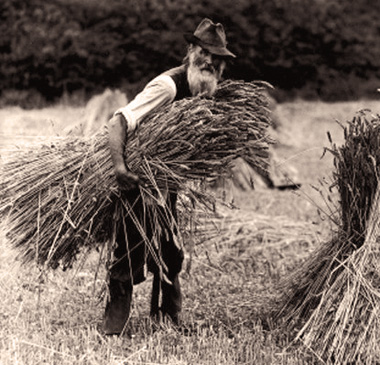
If you've never indulged some minor masochistic desire to try haymaking, you'll have no idea quite how all absorbing, stressful, sweat-inducing and completely exhausting the process is for folks doing it the old way. Not building stooks or anything quite that medieval, but producing small bales that a person of ordinary strength can manage on their own or shift with the wheelbarrow without the necessity of a mega-tractor and fancy implements.
Turning the hay is fine on a comfy tractor but our tractors are so old they're practically vintage and the seats lost their bounce long ago.

When the hay has reached perfection (which is a big ask, fraught as it is with fanatical weather forecasting) you row up the hay and then the baler comes along sucking it in and spewing out bales. But yesterday the wind was so dramatic that I had to row up with the baler travelling all of six inches behind my tractor as gusts sent heaps of hay into the air and across the field moments after the rows were all neatly created. My clutch foot was so tired by the end of the day that I considered going to sleep in the field rather than walking back to the house.
Every bale gets handled multiple times: to stack so that the flat 8 or Perry loader can pick it up; again to position it on the trailer; and then to heave it off the trailer into the barn, getting higher and higher with every trailer load. You sweat copiously, back bent as the hay gets close to the roof, skin covered in itchy seeds and little bits of dried grass.
Friends appear at your elbow and help load, or unload - life would be impossible without folks like this. Two of the builders come and throw bales around for a couple of hours too, delaying their breakfast.
And then the scary bits. The tractors aren't nervewracking as long as you know what you are doing and the land holds no surprises (no hidden, violent ridge and furrow, tree roots, old bricks, springs, cliffs etc). Bales aren't scary either. But standing on a trailer and building the stack is completely terrifying if, like me, you've a real aversion to heights. I shut my eyes when lifted off the top of a loaded trailer by the bale loader, but then I have to clamber up again back at the barn to heave the bales off. To say this is a trial for me is an understatement. I do my best, I really do, but you won't catch me clambering around the heights with anything other than a grimace and unsteady hands. I only feel safe when I have the solid bed of the trailer once again beneath my feet.
The new bale counter didn't work, so I have no proof as to how many bales were made and handled over the last three days, but I do know it's between 1000 and 1500, and I feel I have an intimate relationship with each and every one. But it's done for another year, and unlike the 2007 washout, the 2008 crop looks fantastic. The sweet smell of well cured hay is in the air, and even a bit of local muck spreading this evening couldn't mask it.

Tuesday, 22 July 2008

Mopsa makes hay whilst the sun shines

Don't know what it is about hay but the dogs just adore it. They roll in it, burrow through it, toss it about and play with it. They drape it over their ears and stick their snouts deep into it. It's as if they inhale life, summer, pleasure and delight with every happy whiff. Puppy behaviour is at the fore. It's wonderful to watch and be part of.

Sunday, 20 July 2008

Committed

Well, at this very moment the hay fields are being cut. Five days without rain are being forecast, but whether that'll hold true, who knows? But waiting for the possibility of another clump of wet-free opportunities is a chance that cannot be taken. So in a few days, all being well, I will be humping small bales onto trailers, off trailers, into the Dutch barn and crossing all digits that any rogue precipitation is short and mild. If things don't go so well on the rain front it'll be wrapped into large bales for haylage, which the sheep don't really like. Apart from lambing, this is the most worrisome time of the year.

Friday, 18 July 2008

Small IS beautiful

I don't know why I subscribe to Spiked; I've probably said it before but their stance (all progress is good, green politics is idiotic, cheap food for all rah rah rah and stuff the consequences blah bleurgh blah) drives me quite wild with fury.
Here they are grudgingly singing the praises of the new Jimmy's Farm spin-off, gasping with surprise that he can find it in himself to praise the new technologies and processes that large scale modern farming embraces.
Not surprisingly the piece made me spit chunks of small scale produced Gouda type cheese (the photo is of a cheese made on the course I attended a month or so back).
What is all this sneering at small scale production? Would you really want to only ever eat ready meals concocted in a factory rather than one made to order at a local restaurant or in your own or a friend's kitchen? Would you refuse to wear a hand knitted cardie and only buy your woollens from Primark?
Brian says: "I don’t believe that we should all know where our food comes from or how it’s produced". What? You're happy that your sausages come from the dregs of pork that you'd never consider eating if it hadn't been made palatable by factory processing? You don't care if people or animals are exploited to keep your guts full and your body warm? It's ok if farmers get shafted left right and centre just so you can buy a £1.99 chicken or get a bogof heap of fruit and veg?
I was in awe of the robot milking machine; you can't produce one celery plant or one pint of milk and hope to keep the world fed - large scale is essential. But small scale operations produce stuff that just can't be bettered. We need both, just like we need to maintain rare breeds as well as commercial strains of livestock to ensure a healthy gene pool. Small is forever beautiful.

Thursday, 17 July 2008

Bats in the bedroom

For the last fortnight I haven't been able to go to bed without having to shoo one or more bats out through the window. Big and brave, me, when confronted with bats outdoors, even as they swoop at head height and at top speed as they leave the roost under the eaves.
Somehow, as you remove a shoe and hop about on one leg and start to wrestle your head out of the day's t-shirt, bats whirring past your nut is not quite as appealing.
The other day three of the toothed and winged beasties circled gaily over the bed, dropping neat pellets of batshit as they went. Lovely.
Yesterday, this long eared bat was found dead. If you can tell me whether that's a grey or a brown long eared bat, I'd be most grateful. It looks like a grey-brown bat to me.

Wednesday, 16 July 2008

Topping out

Well it's happened. The crane arrived two hours late but three hours later all seven trusses were in place, some temporary cross timbers banged in, and the ceremonial oak branches secured at the apex of the threshing barn and the roundhouse. The trusses looked so huge on the ground, but the crane's jib dwarfed everything and they looked no bigger than twiglets or matchsticks as they gently moved through the air. See for yourself.

Tuesday, 15 July 2008

# 2 roof...

...not second in status like number two wife courtesy of The King and I, but the second to go up, or very nearly. Tomorrow a 35 tonne crane is arriving, for one day. Seven huge oak trusses will be lifted into place, or at least that is the plan. It's been discussed that they will be lifted over the workshop (you can just see it on the right of the photo, door ajar) and NOT over the house, just in case. So here is an image of two of the trusses the night before, and I hope the last time I see them in a horizontal plane.
Chaps came to measure and suck their teeth. Not only does the crane have to put the trusses onto the threshing barn, it needs to lift two of them right over the building for positioning on the newly rebuilt roundhouse walls, which sits right on the road edge. I suspect the odd tractor or two might have to be halted whilst that happens.
Vehicles have been moved, dogs will be kept indoors, and I will click away to capture progress, hard hatted and bug eyed, as I did for roof number one.

Monday, 14 July 2008

Movement without licence

5.30pm and I down tools. Well, move away from the computer and put on sheep chasing trousers and boots.
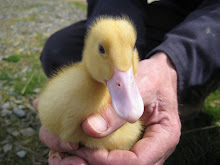
Today the ducks have been moved out of Back Orchard and into the garden for a few weeks. The grass in Back Orchard (so called because it once served as the secondary farm orchard near the house - there's posh) is long, and apart from the pig paddock area hasn't been touched by anything other than waterfowl and the odd badger or fox for three years.
There are big plans afoot for creating a duck pond and some good sized foxproof pens for the ducks, and another for guinea fowl. But first there's all that lush grass, and with haymaking weather failing to appear, there is a real shortage of forage ground at the moment. So after a quick once-over, a sore foot treated and an approving check on lambs being not too far off butchering time, the flock has been let loose in the long grass for a couple of days before the digger goes into pond-making mode.
They are so busy chomping they forget to baaaa. The ewes' milk is drying up and as soon as haymaking releases a spare field, there will be a weaning and a wailing.

Sunday, 13 July 2008

Wildness tamed

Off to Roadford Wood Fair yesterday. It's a small scale affair, and a couple of hours gets you round all the stalls and displays and gives you time to chat at length with the folks selling wood-fired boilers and promoting sustainable domestic energy. You feel worthy and improved just by being there.
I love the locally handmade wicker baskets, the knives made in a charcoal fire, the old but usable tools, the trugs, the yurts, the scent of bombay potatoes, falafel and venison burgers. But best of all are the stands with the owls and the birds of prey. The golden eagle stretches out his leg, doing a fair imitation of the hokey cokey. The kestrel (above) preens and poses. The barn owl sits on the shoulder of its handler, clearly digging it claws through the man's fleece and causing him to wince - why doesn't he invest in leather epaulettes? But best of all is the little owl. I can't remember seeing one in the flesh before. Apparently they like living in orchards. I can only hope a pair might come and check ours out.

Thursday, 10 July 2008

Doing it the old way

Today we have our first woman on site, making oak pegs for the roof trusses for the threshing barn.
She starts with blocks of oak, cuts them with a froe into squared sticks, then sitting astride her shaving horse uses her draw knife to round them into the finished article.
After a day off yesterday because of the torrential rain (the river burst its banks at the edge of the farm), the place is now buzzing with activity; I think half the builders in Devon are on site.

Monday, 7 July 2008

The delight is in the detail

How many times have you walked down a street, across a lane, through a building and been struck by a perfect detail? The curve of a banister, the sweep of a railing, the charm of a door knob, the gape of a gargoyle? I'm pretty architecturally illiterate, but it's the small things, those objects you can hold or caress with your hand that do it for me. I particularly enjoy carved text - the name or number of a house in simple font, in unflashy creamy stone or aged oak.
Cathedral Square in Exeter has many of these human scale features, somehow standing their own against the mammoth cathedral.

Sunday, 6 July 2008

Bit of blatant self interest


Sorry I haven't posted for a few days; I was busy voting myself a £24k annual expense award. I put my hand up, but no-one seems to have sent me any forms to fill in. Do I need to become an MP first?

Tuesday, 1 July 2008

Farming with robots

This is something a friend told me about, and well, I struggled to believe her. But now I've seen it for myself.
It's been around for some years now, but even though the South West has more farms than anywhere else in the country, there are just 20 robot milking parlours in the whole region.
What's it all about then?
Basically, the cow determines when it wants milking (aided by greed as the robot supplies food too), and hops onto the unit which then takes control with no-one needing to be present. First the computer notes which cow it has in its clutches from the transmitter hung round her neck. The gate closes to keep her secure, and a warm steamy wash with clever little rollers brushes up and down each teat, just like a miniature car wash. Seeing it in action last night at a local farm I suggested that particular function might have been invented by Ann Summers. Next, the laser comes into action to precisely determine where the teats are before docking the cups to them. If the cow shifts a little, the lasers recalibrate and have another go. If only 3 quarters are in action, the computer knows that too. Then the milking starts. Each quarter of the udder is milked independently, so the machine stops milking each one when it is empty. Meanwhile, the computer is analysing just about everything: milk flow; temperature; quantity of milk produced from each quarter; number of times the cow has presented herself for milking; whether the cow is about to come down with mastitis; if it's been milked a couple of hours ago and needs shoving out and not milking; you name it.
The cows take themselves through a non return gate when they want a little steaming, brushing and milking, otherwise they are free to help themselves elsewhere in the cow shed to feed, a lie down or a relaxing scratch from the automatic cow brush. Although the farm I visited keeps the cows indoors, you can certainly include fresh grazing into the system by enabling recently milked cows access to outdoor grazing.
It was an incredibly intelligent system, requiring minimal labour, and providing the farmer with everything you need to know about your cow, enabling swift preventative care. It also sends phone alerts if there is a problem of any kind, with clear messages that describes exactly what requires attention. Up to a week is needed to acclimatise each cow, and the system clearly produces very quiet cows and gives them almost everything they need.
But although I was in awe of it all, I don't want milk from cows excluded from spring and summer natural grazing, and I'd like to see for myself a system that includes significant access to grass even if it creates a slight decrease in the milk yield. I wonder what the Soil Association view is on this.

If you are intrigued and want to see the system in action, you can watch a video here.

Monday, 30 June 2008

Some day I'll fly away...

...but not yet. Talk about creating parental havoc! I nurtured my goose eggs through 31 incubating days, popped three goslings (with some duckling mates) under a heat lamp and fed and watered them for weeks. Then I put them the outside to enjoy the sun and the grass. They spent a couple of weeks growing gawky and mildly feathery among the fluff, and I looked on maternally, pleased at their progress, chuffed at my surrogate motherhood.
Then it was time to get them out of their small pen and into the big wide world with the gaggle of geese in the orchard. One of the geese was sitting on a clutch of eggs, so I popped them in with her, and they went running to her side and sat under her wing overnight. Satisfied that the grown-ups had bonded firmly with the youngsters, they were all let out to play and roam under the apple trees, cropping grass for all they were worth. I go back up an hour later to check all is well, and... no goslings.
I hunt high and low, in ditch, under hedge, behind logs, in secret tuffets of grass, between bales, through gates, in every conceivable place. I am a mother bereft. It is the empty nest syndrome for real. I feel SO GUILTY! And why didn't the geese give a warning shout if there was a predator about?
The hunting continues, and everywhere I can hear the cheeping of young birds, and I'm sure the goslings are about somewhere, but every wild bird is fledging at the moment and it's impossible to isolate a honk from a cluck or a trill. I go to bed forlorn.
This morning I rush about getting ready to go to town, and hear a cry. All three gossies have reappeared, unharmed, in the yard being used by the builders. The birds rush forward, terrified by their unwanted freedom, lack of food and water. They are gathered up in welcoming arms, made much of, and put safely in a pen whilst their orchard accommodation is adjusted to keep them with their elders but secured.
But of course, before anyone thinks I have turned into a complete softy, if any reveal themselves to be ganders they will become freezer fodder and served to my very best mates. With apple sauce.

Saturday, 28 June 2008

Farming - a glamorous profession

33 acres of grass off the farm are now tucked under plastic, a couple of miles away, pickling in their own juices to make lush silage for next winter to feed hungry cows.
If you ever wondered what happened to the car tyres that aren't turned into chi-chi playthings, the answer is that farms everywhere can never have enough of them to hold down the enormous sheets of plastic that keep the air out of the silage clamp.
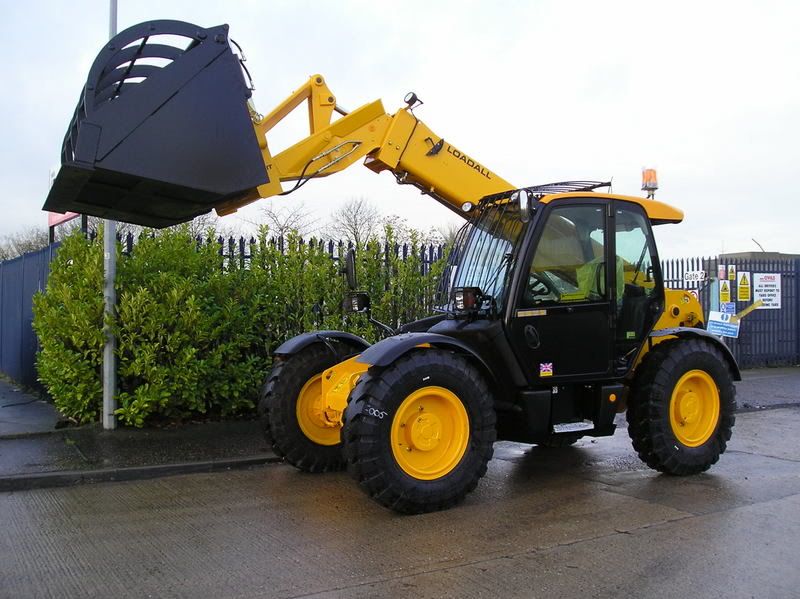
I wear gloves to load the telehandler grab with the tyres (you can see a load at the far left of the picture), eyes out for rats curled among the sun warmed rubber. Last year I found toads, but no joy today. I do get nicely splashed with the ancient rain water and mud that slops inside the tyres; a free face pack.
Week after next, if the weather does as it's told, there will be much ado about haymaking.

Friday, 27 June 2008

Extraordinary Devon farms

Reading Field Day this week I found out for the first time about Risdon Farm, not a million miles from here. Now, I may not have any Christian or other religious principles, but using farming to ground lost souls seems to me a sound pursuit (as long as I don't have to believe in god en route).
There's the marvellous Farms for City Children, set up by Clare and Michael Morpurgo, also close by. Other city youngsters get a taste of farm life through the Black Farmer, and a chance to explore art inspired by organic farming with Organic Arts, again in Devon. And then there are the LEAF farms, the South West having its fair share of those.
There are probably heaps of amazing farm projects like this in the county, using farming as an instrument for achieving a variety of social objectives.
Selfishly, my social objective is to keep me and mine fed whilst being kind to the environment, and thus to ourselves.

Wednesday, 25 June 2008

Bubble gum, blazers and beaming smiles

Yesterday I was on the tube, chugging along to a day's work in the big smoke. I looked around me and the carriage was full of young school children. They were chatting animatedly, all very well behaved, and obviously enjoying the novelty of being out of the classroom. Some of them were clutching pieces of paper and from what I could rubberneck it seemed to be a geography field trip to the east of the city.
And then I really looked at them and wondered what was so very familiar. It was the tie. And the school badges on the blazers. They might have been on the opposite side of London, but they were all from my old school. I looked around for a teacher, but couldn't tell which adult was with them or was just another passenger. I only had a minute or so before my stop. I so wanted to say "I used to go to your school", but I was unusually dumbstruck, it being such a very public place.
The fashions for wearing school ties hadn't changed - looped huge and very short for those desperate to look nonchalant, long and thin for the bookish. Even so, it all seemed so very, very long ago.

Sunday, 22 June 2008

The scent of paradise

The scullery smells divine. Sitting on the cobbled floor is a large bucket filled with lemon zest, lemon juice, sugar, a splash of cider vinegar and heaps of elder flowers.
I keep going in there, and yes, I am inhaling.
It's a very first attempt at elderflower champagne. What with the flowers nodding at me every time I walk the dogs, and empty cider making kit taking up space until October and the apple harvest, it would have been unseemly to resist.
I can't imagine an easier harvest for picking; no thorns, no nettles, no peeling or pulping or stoning. Just a quick click of the secateurs, a gentle shake to dislodge any insects, and you're done. It's like making food from clouds.
If the flowers continue to oblige, next weekend I'll have a go at some elderflower cordial.
And having just re-read this, I can imagine folks snorting into their beer over the feyness of it all. Chin-chin!

Saturday, 21 June 2008

Getting there

Staying on the theme of building, I've not shown the progress on the cob barn for ages, and it's nearly finished!
Yes, the doors and windows have to be completed, the remaining downpipes have to go up (or should that be down?), and there is some fiddling around and general tarting up, but on the whole, the major stuff is done.
It has a roof! You can enter without taking your life in your hands. You can stand inside and dream and plan, and admire and chat, and think and pat the dogs, and grin. Lots and lots of grinning.
Those black spaces that are doorways will have doors, those top windows will have shutters, those heaps of sand and timber and stuff will go, and there will be a useful and used space. All those plans will be taken out of the head and put into practice. No more excuse for not getting an in-pig sow, cows, or delaying the breeding of guinea fowl and ducks.
Across the yard, the threshing barn has taken on the scaffold shroud shrugged off by the cob barn. And as a reminder of the sad ruinous state of the cob barn back in July 2007, here's the before shot:

Thursday, 19 June 2008

Building

It's been raining, and chilly in the evenings, and more wet is forecast and I've been worried about Hard-Hattie getting cold and torpid. So with a little help (quite a lot of help really), I've made her a snug Hattie House that she can creep into and stay dry and wind-free. It's small scale. It's fit for purpose, and it was completed in a couple of hours.
The photo of the tortoise house was taken up on high, from the top layer of scaffolding now enclosing the threshing barn.
I look at the great works and am rather taken aback by the huge scale of it all. It won't be many weeks before roof trusses are swung into place ready to take the slate. The roundhouse walls that connect to the threshing barn are now complete and its roundiness is also scaffolded inside and out so that the thatcher can work safely once the roof timbers are up. It's all a bit eye-widening at this stage. I'm having to pinch myself.

Tuesday, 17 June 2008

Of runner ducks

I've always enjoyed a good runner duck. I've had various runners over the years but never managed, somehow, to get hold of my favourite colourway, the black runner duck.
These are the ducks that shepherds use at country shows to demonstrate the skill of their best dogs whilst keeping the punters chortling. They (the ducks, not the shepherds) stand very upright and have amusement written into their genes. They are also mighty fine egg layers.
They are very different in physical type from my chunky Aylesburys, and the contrast is part of the appeal. I'd finally decided a couple of months ago to start a small flock of black runners as soon as decent fox-proof pens could be made. Following two unwelcome visits, as a temporary measure the Aylesburys have been protected by three types of electric fencing, but if I give myself another jolt I'll probably lose the ability to string a sentence together, so told myself I'd just have to wait, and my runner duck dreams were put on short-term hold.
And then, you know how it is, you browse the postcards pinned up on the noticeboard at the feed merchants, and there it was, a free to good home notice from someone understandably fed up with a randy drake molesting her small defenceless call ducks.
His name is Beany, and now he's mine. And before you worry, he's safe. At night he goes into a duck hut, and by day he shares the front garden with Hard-Hattie until the pens are made and I can get him some girls of his own.

Monday, 16 June 2008

What will we be eating in 2009?

Last week the PM announced "a new approach to food policy that eliminates controls on production and restrictions on trade, and encourages a greater focus on improving agricultural production and productivity".
This week, the petrol stations in the South West have restricted each car to £10 of fuel.
I've been wondering what all this might mean for the food we eat in the near future.
Will there be a huge increase in grow your own? Will people populate window boxes with lettuces, growbags with tomatoes and rip up their concrete slabbed front gardens to sow rows of veg and plant fruit trees? Will allotments boom, will guerilla gardening emerge on every urban patch of scrub? Will public parks departments plant cabbages, artichokes and cavolo nero instead of inedible exotic statement plants? Will there be mass sowing of spuds to keep whole streets self sufficient in carbs? Every ex-battery hen could be re-homed as backyard egg producers, each village and suburb could partner local farmers by adopting cows, pigs and sheep that will travel oil-free yards between farm and freezer.
Will farmers finally get a fair price for their produce, lead the bargaining with supermarkets from a position of strength, form cooperatives and increase their opportunities for selling direct?
On the other hand, an elimination on control could mean the end of animal welfare responsibilities, an abundance of GM crops and use of terminator seeds, a chemical explosion and a return to unwanted surpluses.
I wait to see what details will be announced. Meanwhile, I'm weeding my veg patch and increasing my flock of ducks, planning runs for guinea fowl, and as soon as the barns are finished, cows are on the shopping list. There's always a surplus for friends too.

Sunday, 15 June 2008

Coppiced oak hedge

Two winters ago, my favourite green lane on the farm had one of the hedges running its length coppiced. There were great fat trunks of oak poking out pathetic scrawny specimens of branches, willow keeping out the sun and everything suffering and stunted because of the dark created by overstuffed spindly growth and the resulting damp. So drastic measures were called for and the natural archway of overgrowth was temporarily lost.
But now, looking sideways on to the lane, you can see how the oaks are flourishing and gaining thick rich growth. The foxgloves have inhabited the clefts and crannies in the pollarded oak stumps which are bursting with new life, and everything is thriving. Next year I should have my archway back, and this time crowned by healthy young trees with enough space to breathe and grow.

The art of incubation

I've had and used a little 20 hen egg incubator for some years; it takes just 15 duck eggs or 9 goose eggs, so my hatches have always been small, but now I have pumped up the volume a bit with one that takes 35 duck eggs (the automatic turning cradle won't accommodate a goose egg).
But with increased volume comes increased risk and increased potential for disaster. If something goes wrong (power failure, unnoticed cracked egg, temperature variations etc) you end up spoiling a larger potential hatch. The phrase putting all your eggs in one basket has never rung so true!
My last hatch was not a success; I hadn't noticed that a batch of bought in Indian Runner duck eggs had rather fragile shells, and as the cradle turned it cracked an egg, and whatever evil humours poured forth ended up contaminating all but six of the fertile eggs.
Bummer.
But yesterday I set another batch of my Aylesbury duck eggs and my neighbour's Cayugas to hatch, and in a week I will candle them, and hopefully if I am properly observant at my daily checks, there will be life in 28 days.
The photo is of three week old goslings, Aylesburys and Cayugas that I put out on grass for the first time yesterday.

Thursday, 12 June 2008

Sir Alan says it's ok to lie

Did millions of viewers watch Siralan Sugar's Gerald Ratner moment last night? Did we really see Claire's victory tossed carelessly to a proven liar?
Perhaps I'm being over fussy and prissy, but last week when Lee's CV lies were revealed, I thought his firing was a no-brainer. When he escaped I thought Siralan was keeping him on for a spectacular runner-up firing: "What? Hire a liar and put him in charge of important business in my organisation? Never!". He was obviously lining up Claire to slide into pole position.
But no. Suffering from the myopia that saw the Badger relegated to second place (and Claire is after all the Badger Mark II), Siralan has told the world that it's fine to lie, that we all do it, and promptly picked a prime example of the dishonest charmer breed to represent the kind of person he wants in his organisation.
The brazenness of this decision has all the trappings of the insular view that led Ratner to tell the world that his products were "total crap". Now we all know, endorsed by the small man himself, that his staff are untrustworthy. I can see the painful twisting of Margaret's mouth.
Siralan, it was great tv, but you're fired!

Sunday, 8 June 2008

A day of insects

Late afternoon in the glorious sun, a neighbour came and set a number of moth traps. "It's National Moth Night" was the surprise announcement. But it was a cloudless and chilly night, and not the best for catching these nocturnal furred insects (perhaps they aren't all furry, but I know nothing about moths, and furry is what comes to mind).
All the same, when we checked the traps this morning some beauties were caught, recorded and set free to live out their remaining hours; most adult moths live for short periods from a few days to a few weeks depending on the species, although moths that hibernate through the winter live for months.
The traps captured a number of buff ermines, a white ermine (below), a gold spot, a peppered moth and a host of others with wonderfully romantic names. But best of all, there was a great palm sized poplar hawk moth (see above). From the size of the body I could finally see why a bird would find the moth a nourishing feast.
And then I checked the sheep, with relief that shearing is planned for tomorrow morning, and that there hadn't been any signs of fly strike to date. Extraordinary what can happen in 12 hours; 2 sheep now had blow flies buzzing around them and one had dark, moist patches that indicated maggots had hatched. All plans were put aside as the sheep needed instant attention. The two ewes had a full early shearing, and one other had her tail area clipped.
One beautiful, harmless insect, another that can cause death. Truly, a day for insects.

Friday, 6 June 2008

Fairs and such

Nothing like a country fair for putting a gleam in the eye and a pain in the pocket. Last night I was at the private view (champagne reception, natch) for the Contemporary Craft Fair down at Bovey Tracey, where us bods in the arts get to swig fizz alongside those with loose wallets and great taste.
In previous years I've been tempted by the jewellery and have returned with yet another chunky one-off bangle, but I have enough, and this time was there to admire the furniture in particular, purely as a voyeur.
And it being fair season, it was off to the Royal Cornwall today, where in utter contrast to Bovey, the stuff in the massive craft tent was nothing to do with craft and everything to do with mass produced tat, but there were plenty of other marvels to enjoy, including some wonderful artisan work if you kept to the smaller stalls.
Although cattle and sheep outside of Cornwall were kept away because of Bluetongue precautions, the livestock was still wondrous to behold and smell (clean, well cared for and warm). And continuing on the strangely coloured proboscis theme, a blue-tongued skink was doing the rounds, as was some species of skunk (skink/skunk, all the same to me).
The high quality of local food was at the fore; yummy Cornish produce was highlighted - lots of wine, cider, beer, cheeses, chocolate, meats of every variety including beautiful salamis, asparagus, preserves, puds, clotted cream and more.
The sheep shearers and the pig handlers competed furiously, one Gloucester Old Spot hurtling happily across the ring, oblivious to its owners cries.
Prizes were awarded for this and that, and the commentators were so well briefed that it sounded as if they knew every competitor and their animal personally.
And then there were the tractors - most far too large and serious for me, but there was one, a refurbed Massey 35 that looked like a Noddy car in agricultural garb, that I could happily give barn room.

Tuesday, 3 June 2008

First catch your llama

So, yesterday the vet rang and said "your Bluetongue vaccine is ready for collection. Bring a cool box. That'll be £56.04 for sixty doses. Oh, and you'll have to sign a disclaimer for the llama - it isn't really covered by the regs. And once you've opened the vial you have to use the lot within 8 hours."
The llama hasn't been handled for three years. Yes, he feeds from a bowl in my hand during the winter when he gets his goat mix to supplement the greenery he gnaws on (hedges, bushes, trees, hay, grass), but he keeps a wary eye and won't let me stroke him, even after the best part of a decade. He's shy. Luckily he is a self sufficient animal and doesn't have a worm problem or other ailments, so he isn't handled; it would only disturb him. But now I have no choice, and the afternoon is spent arranging gates in as unobtrusive a set-up as possible, so that he can be enticed in to the field shelter and banged to rights. As in earlier times, I intend to lasso him in a corner. He will resist for a moment or two, then kush; sit down and let you do what is needed.
So, today having vaccinated all the sheep and administered a prick of the syringe into my own finger for good measure, there were efforts to get the llama into the shelter. He nibbles from the bucket but as the field is brimful with grasses, he won't go in. Time for a regroup and a rethink. A hoard of neighbours arrive to use the barn to sort fat lambs for market. Six of us take a long rope into the field and slowly corner the llama so he has no choice but to go into the shelter. Gates are shut, three of us go in. I hand over the syringe so I can concentrate on putting a lead rope round his shoulders, but he stands quietly, and before I blink one of the group has injected the 1ml of pink juice with a sharp new needle, and we are done. The llama doesn't even notice.

Sunday, 1 June 2008

The cows are getting it on

A young bull and his four girlfriends have come on a visit to give some of the fields the cattle grazing they need. As it gets dark you can hear him trying out his lungs to let the locals know that he has arrived.
He seems very calm and unruffled, taking his new surroundings and his companions as nothing less than his due.
Once the orchids and other wildflowers have gone to seed at the end of the summer, I will open the gate to the glade of purple moor grass in Moor Wood and they will curl their long tongues efficiently round the plants, avoiding the need for swaling this winter.

Wednesday, 28 May 2008

Know thy self

I have been lingering far longer than normal for a book, over Doris Lessing's autobiography, Under My Skin. For a change I haven't rushed at it, but savoured the descriptions of a childhood in Rhodesia and furrowed my forehead untangling the communism of her young adulthood.
Last night Alan Yentob was allowed into her kitchen to make her tea, lots of tea, and we were reminded of a woman who has made the word indomitable her own descriptor.
Age presumably plays a part, or perhaps not after all, but I cannot remember ever hearing or reading someone so absolutely self aware, so understanding of her own nature, and with such a sharp and clear view of humanity. This does not make for a soft experience, for her (leaving her first two children to pursue the life she had to must have been beyond painful) or for us (people are interesting but hardly important). She is revealed as a woman full of drives; her love of the physical, the sexual, the political, the humanitarian, all without caveats, all without delusion.
The programme shows her in 1958, very beautiful and specific as ever, sponsor of the Aldermaston marches, putting an unequivocal case against nuclear weapons, coolly and unemotionally.
To be so clear in ones own mind on any issue, about oneself... how few of us have that rarest of abilities. And if we think we do know our own mind, we mostly struggle to express what we know.
Watch The Hostess and The Alien here.

Monday, 26 May 2008

Are reptiles taking over the farm?

What with Hard-hattie making an impromptu appearance, I thought that would be it on the reptile front, but no. Zigzagging through the culm, trying to avoid the clumps of regenerating purple moor grass, I froze.
Sliding swiftly away from me was a thick, scaled, chevroned, slithering length of snake. Shivering with more fear than excitement, I blinked and it was gone.
It's so hard, without seeing the head, to know if it was a grass snake or an adder, but those chevrons were so marked, that I think it might have been an adder. And I was wearing sandals and shorts. Oh my.
(And no, I didn't hang around long enough to take a photo; I whistled my way to the edge of the culm and took my leave).

Pencarrow House

After a solid Saturday of fencing, a gloomy forecast and tired muscles dictated a change of pace on Sunday, so it was off to Pencarrow House for the Cornish Guild of Smallholders Country Fayre and Farmers Market (by kind permission, so it says on the programme, of Lady Molesworth St Aubyn).
Avoiding Wadebridge, the scenic route was taken down and up and down and up a very narrow lane over weak bridges (do they put up those signs to give you a free adrenalin rush?) where every bend required a leap of faith. The mile long drive to the house takes you through fabulous redwoods and rhododendrons, and army chaps (or were they all just fond of camouflage?) point you towards a sensible parking spot. Beautiful views, soggy grass, a heap of dogs (not Mopsa or Fenn who stayed behind to guard the bananas) and a pair of fabulous shires in harness. I have never before seen a horse with a moustache, but one of the shires had this going on in the vicinity of its top lip.
The food on offer was luscious, and the boot filled with flap jack, orange drizzle cake, hog's pudding, veal escalopes, two types of cheese, asparagus and a bag of spuds (the potato bucket was empty). Oh, and chocolate mousse, sticky toffee pudding, a white flowering chive plant and a cone of bramley and cinnamon ice cream. No excuse for starving in these parts.
Back home to find a fox had got through the electric fence and killed the second duck this month. This time however, it couldn't pull it through the new stock fencing and had dragged it as close to the fence as possible, eaten its head and left the body behind. It's clearly time to put up some permanent fox-proof pens for when there's no-one home. On a chirpier note, the incubator has a number of new ducklings hatching, so there are just a few weeks to get the pens sorted before this lot progress to the outside world. The to do list keeps growing.

Friday, 23 May 2008

They're closing my post office

"The Government has decided that up to 2500 Post Office branches across the UK will close. This local consultation will not change the Government decision, but aims to help Post Office Limited identify if the appropriate branches in this area have been proposed for closure."
So says the leaflet I picked up in the post office today. Instead of having a village post office that is open for 16 hours, four days a week with a heap of handy parking for those of us who live out of the village, they are proposing a mobile service open for a total of five hours, two mornings a week, and that we should instead use another post office 4 miles away (8 mile round trip) that is on a fearfully dangerous bend on a main (well, main for round here) road, with parking for one car.
They say that we can also use online services, but the village has been refused broadband by BT.
I am appalled that a Labour government is overseeing the dismantling of rural community services and at their failure to ensure equal access to key services across the country. They are a suicidal government.

Thursday, 22 May 2008

Slow food movement?

Ummm... look what I found.
I was checking for Southern Marsh Orchids. I found one, and a second plant not yet in flower. Not the great mass I was hoping for, but I got distracted before I could really peer among the green stuff to see if there were any more promising leaves.
The dogs were nosing at the edges of the field, so were lagging behind me when, well, there it was.
I started to chuckle, and then burst into laughter. The stuff I find on this farm never fails to amaze me.
Having googled and inspected, I think it is a female mediterranean spur-thighed tortoise. That's a phrase I never thought I'd use.
I've put her into the walled front garden where she is safe from the dogs, there is lots of tortoise favourite food growing naturally, and put down a dish of water. I've called her Hard-hat. She doesn't belong to any of my few neighbours. What do I do now?

Monday, 19 May 2008

This is the after shot, after the dangly barbed wire, faded baler twine and rotten posts have been wrenched gleefully from the river bank.
This is the shot of plans fulfilled and dreams realised. Where dogs and humans can reach the river and splash about. Where people can place beer bottles for chilling and dogs can lap water without wire draped about their ears. Where the river can flood its banks without depositing heaps of twigs and stuff in a sieve of unforgiving stock fencing.
The fence will be made anew fifty yards above the river, and I will find a good bum-shaped log to put near the water, so I can watch and think, and watch and not think.
It took one vigorous Sunday morning to do this, and I've been back twice since to admire, and it's only Monday.

Wednesday, 14 May 2008

Blowsy or delicate?

I spend so much of my walking time seeking out the delicate notes of wild flowers that it's a shock to see the horticultural brassiness of the cultivated varieties in my tiny front garden. But this week the bloodshot eyeball peony and the Dame Edna gladioli are visual tricks that are somehow trashy in their exuberance in comparison to the delicacy of the ragged robin, the stitchwort and the many varieties of the carrot family that Jackson Pollock and Miro the hedgerows.
If I was to determine which of these two opposites describes me, I would have to go for the blowsy, in the same way that I'm a Bernese dog person and would give nil house room to a chihuahua. But it's those wild fragile blooms that attract me; those banks awash with the froth of cow parsley, red campion and bluebells just steps from my door.
Oh, and before I forget the sensation, today I smelled coriander in the orchard. There are no cultivated herbs planted there, so I stopped and sniffed again. I just adore the scent and taste of coriander; along with thyme it is my favourite herb, but it was not supposed to be there. And then I pulled down to my nose the nearest branch of apple blossom and inhaled. Yes. A definite but subtle hint of coriander. I felt a Jilly Goolden moment come upon me as I checked that it was a cider apple, a Bulmers Norman in fact.

Sunday, 11 May 2008

Paths and tracks

When I set out each morning to feed and check on the animals I don't concentrate on the path I take across a field or up a track, but when I retrace my steps, empty bucket in hand, pleased perhaps with the progress of lambs, weaners or goslings, then I notice the parallel lines in the wet grass stretching away from me, marking where my feet have scuffed through the sward. It's incredibly difficult not to repeat that first journey exactly.
Often as not I have followed a sheep track, one they have made from hay rack to gate, or gate to gate, often with an eccentric meander round a comfortable contour rather than the shortest route. Like a waterway, the sheep tracks have tributaries and forks, where they split and regroup in answer to some internal satnav.
As the grass lengthens the tracks become more confirmed, better defined, a helpful path. The dogs always follow these paths and only go off-roading if distracted by a keen scent.
Last week I walked with friends through their woodland bordering a stretch of river. "Do you walk through here a lot?" I asked, noting the clear narrow mud track that moved us forward between the swathes of bluebells, wild garlic and orchids. "No", they said, "about once a year". The place is left undisturbed to encourage the bountiful flora and fauna. The track was the work of deer, and in the damp undergrowth we could spot lots of sharp hoof prints.
Somehow the tracks made by tractors and digger just don't have the same romance, but even they follow the animal tracks; animal instinct directs across the firmest and driest ground, why wouldn't a driver take heed?

Friday, 9 May 2008

The boys are back in town

I have used my new found competency and brought home the rare breed bacon. Three Berkshires, my pig breed of choice, and a pair of Middle White/British Lop crosses to make up the numbers.
Middle White adults are the most ugly beast, with squashed wrinkled heads, reminiscent of a Sharpei, so I'm hoping for the sake of not scaring the local wildlife, that the British Lop element will temper their looks whilst maintaining their reputation for perfect pork.

Thursday, 8 May 2008

Testing competence

Yesterday I proved my competence. Not something I'd normally be able to do, klutz that I often am. But I did do it. Twice. I am now legally certificated (certified?) to transport both pigs and sheep. Good thing too as this year's weaners are being brought home for their joyous outdoor fattening process today.
The computerised multiple choice exams contained a mix of pointless questions (the kind of thing you would expect to be able to check up in a handy notebook kept in your glovebox, as necessary) regarding lengths of journeys and associated paperwork, and things that are absolutely key to animal welfare. Would you haul a pig by its ears or deliberately create mayhem whilst loading your carefully raised livestock into a trailer full of sharp pointy dangerous bits? Not unless you were a sadist.
I can see the point of requiring professional hauliers to take part in a livestock handling course and provide actual evidence of their competence, NVQ style, where observing people in their work situation is key. But filling in a computer test when you may be unfamiliar with a pc, may not be a great reader, but are a responsible driver and have received good training as an animal handler seems a bizarre way of ensuring livestock is actually and not theoretically well treated before, during and after journeys.
As for farmers and smallholders, most of the answers are plain common sense (although the questions trying to elicit that sense can be strangely convoluted to catch out the unsuspecting), and I can't help feel that this process is oddly out of sync with need and reality. Meeting this legal requirement cost me £50 (after having hunted down a cheaper option than I was originally offered). And that was having eschewed the time and £ for the optional prior training course. But I made the best of it; I spent the afternoon with a friend lunching and lounging round Launceston as a pre-exam softener. We both passed.

Wednesday, 7 May 2008

Future promise

The orchard is blooming. After supper a wander with the dogs to check on the sheep and their lambs, the fencing, the drain repair, the sogginess or otherwise of the ground. And then back through the orchard, which has burst into flower, young trees and old in their May finery.
There was talk of last year's June frost and the poor fruiting season that resulted. But this all looks so burgeoning that it's hard to believe there will be anything other than barrels of apples, armfuls of plums and gages, baskets of cherries, crates of damson and sacks of pears.
Click on the pic to see those amazing pink veins on the petals.

Tuesday, 6 May 2008

Going the Reagan and Bush route

I know that we are told that folks in the UK like to tag along on the coat tails of the Americans, but I always thought that was a myth, that the British just enjoyed the parts of US culture that it fancied and left the rest (bible-belt belligerence, donuts for breakfast, domesticated Humvees etc) alone. But no, it appears that we are more umbilically linked than I thought.
London (that's our capital, apparently, for those of us who breathe the air hundreds of miles away) was given a choice and London has chosen to be represented by a lying political buffoon. It's like having Donald Duck as mayor. Or Ricky Gervais. I cringe with embarrassment at the image this presents of the UK on the international scene. My sympathy for those Americans gobsmacked by being represented by Bush (both) or Reagan has reached a new high.
In my conspiracy theory moments (of which I have few), I suspect the Tories have been incredibly clever: by putting up Boris for Mayor they have taunted the populace: "if you are prepared to elect this man for London, then you are prepared to vote in David Cameron and his tribe, just because you are so pissed off with Labour".
The fact that they are right shows just how appalling the state of government is. When government is taken over by show business, we are in serious trouble. Brown: get your finger out!
So I offer a flower or two from my walk in the woods yesterday, as a calming influence.

Thursday, 1 May 2008

Eden - so near but yet...

...so far. It's only a bit more than an hour from here, but I've never been to the Eden Project. As it's so close I expected a visit would just sort of happen some time without me having to actively arrange anything. Huh! I have friends that visit me from all over the country who are en route for Eden and I can't sort a 60 mile jaunt.
This week I had to attend a work related thing and it was at Eden. Wonderful; I can go round in the morning before doing my work thing in the afternoon. No chance. Too busy. Hung over the balcony of the visitor centre to take a photo, and that was it. It was like being given a sniff but not a taste of a truffle. Now I know what it's like to be a French pig.